
My Breakfast with John Patitucci (Bass Files/From the PB archives) Part II
The prolific, acclaimed bassist talks Chick Corea, his beginnings, the impact of other bassists, his instruments/gear, more; 2018 interview prior to a performance with Corea's Akoustic Band

(Continued from Part I)
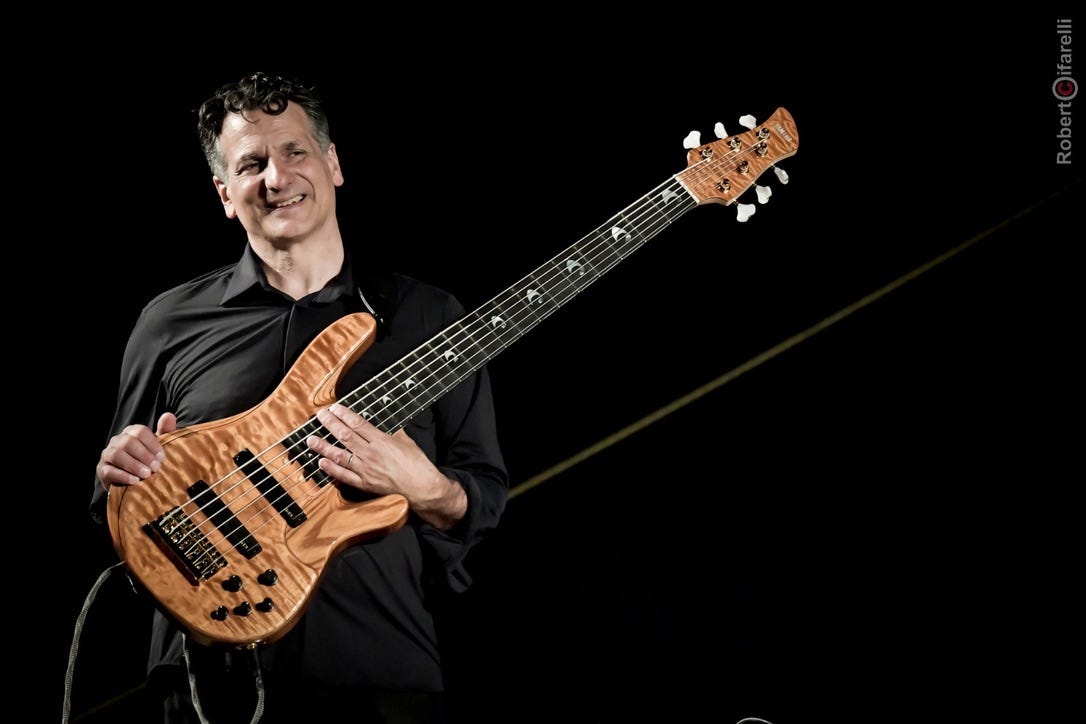
So when it comes to playing a walking line in a straight-ahead jazz setting, what is that role? How do you define that?
It’s an architectural role. I would say, in my view, Ron Carter (exemplifies the role), because he’s still here with us. He embodies it. Not just because he’s just still here with us. Because his career dates back to post-bop and that real foundation of playing swinging blues. But then he wrote the book on how to evolve that in modern times, like the band with Miles and Wayne and all that. He created a whole style, which obviously made a huge impression on me. Otherwise I wouldn’t have been able to play in Wayne’s group in the way that I thought about playing, because Ron totally shaped it.
In terms of the freedom and possibilities.
Not only the freedom, but the thing that a lot of people miss is the foundational structure and the architecture that he always brings. And that’s what I try to tell my students. They hear us do interesting other things. But we couldn’t do that unless we were able to play a medium tempo and lay it down. Because the rhythmic foundation of the music is still the most important. The notes you hang on the rhythm — of course they’re important. But without the rhythm they’re nothing.
So Ron had all of that. His mind is incredible, the way he creates bass lines that – they spell the harmony but they give the rhythmic feeling. They create an environment for the whole band to feel free. And his ears were amazing – and he always was throwing things towards the soloist to challenge them. His whole concept. And also Ray Brown for the way he’s so strong and powerful. And his lines are very solid, too. Obviously.

When I think of the modern conception, tonally and everything else that I learned in my own playing, it’s Ray Brown and Ron Carter.
Yeah. And I got into Paul Chambers, of course. I kept going. Israel Crosby. There’s so many guys. If I start mentioning names.
You mentioned Rufus (Reid).
Rufus was a presence in my life. I met him when I was 15. He mentored me and he encouraged me. Even though we didn’t live on the same coast for a while. I was out there in California. He was very cool. I used to call him a lot on the phone. He would give me advice. I had his books to study with.
Then also I got into hearing all these guys come through California -- Eddie Gomez with Bill Evans, I heard Dave Holland with Sam Rivers. I heard all these different guys and I was absorbing it. Charlie Haden with Old and New Dreams. I was taking in as much of the history of the instrument as I could without even realizing it. I was just loving the records. And then I went back and started to really check out (Jimmy) Blanton. Blanton, I think, I really appreciate more than ever now, as I’ve gotten older. But the guy who killed me earlier was (Oscar) Pettiford. I think Pettiford and Blanton really inspired Ray a lot. There’s been many guys since. There’s all kinds of great bass players all over the place.
When you’re playing walking lines on bass guitar, how do you think about that and how does it vary from maybe the walking approach on the upright?
I think a lot of it is informed because I play the big bass, the double bass. It informs a lot of the way that I think sonically, beat placement, note placement. These are all huge things that I’m always, again, trying to tell young bass players – note length. I remember playing in Victor Feldman’s trio when I was pretty young, before I played with Chick. I remember him saying one time, “You know, you need a little more space between your notes.” ‘Cause he had played with Ron, recorded with Ron. In those days, there was a lot of recordings of Ron, he was playing the pickup and different things so his notes were very ringing, sustaining. I loved that. But I was missing the fact that even when he had that long sustain, he was connecting the notes. There was a little space rhythmically that he would have to make it bounce. I didn’t totally understand that. I was young. Years later, all of a sudden I was walking (on bass). I think I had already come back from New York and realized that I was putting space now between the notes in a different way.
On bass guitar?
On acoustic bass first. And then I realized that on bass guitar I had to connect the notes. But I needed that little – it’s almost like you can’t even measure it. There’s a little space in the note length. In order for it to bounce. And reinforce that kind of triplety feeling like when you hear Elvin and Jimmy Garrison. Jimmy Garrison was a huge influence on me, too. He definitely had that bouncy space and big sound. I like Wilbur Ware, too.
On the upright bass, there’s a natural resonance. When you’re playing bass guitar, do you try to emulate that or try to get that resonance and sustain? How do you do that?
I’m a left handed person who plays righty. And a lot of time I think guys that I see playing lean on their right hand a lot. The sound and a lot of that kind of stuff happens over here (right hand). That’s how you make your growl, the big bass. Well, also you make things happen on the electric with your left hand.
I go for a darker sound when I’m playing the electric bass. That’s the first thing I tell somebody who comes to me and they play electric and they wanna play jazz. First of all, you can’t have a bright sound. It doesn’t go with the music. You can’t sound like Chris Squire from Yes or something. That’s what makes (Steve) Swallow so impressive. He plays with a pick and he’s playing upstrokes all the time. I don’t how he does it.
I was blown away when I first heard that, because I had a kind of bias against bass players who played with picks.
He’s unbelievable. There’s that. There’s also the fact that there’s the tone. Later on I had them (Yamaha) develop a semi-hollow bass, a big bass that looks like a big jazz guitar.
You’re talking about the one you’ve been playing the last few years, the Yamaha?
Yeah, and then I got a smaller version that’s lighter, for traveling. I’m going to bring them out. I’m playing with my guitar band at the NAMM show in a couple weeks. I’m using that big guy. That thing, when you walk on it, it feels like —

That’s a Yamaha semi-hollow?
Custom-made semi-hollow. It’s real big.
And that’s kind of your primary bass guitar these days?
For that kind of stuff, yes. If I’m playing a very R&B-ish kind of situation, I use a solid body Yamaha, I have different things – a five-string, or I have the little semi-hollow. It’s lighter and it’s also a little easier to play. It also has a longer neck so I can get to notes that I can’t get to on the big one. The big one – we went for massive tone. We had a big stick of mahogany. We did it kinda like an old jazz guitar. Because of the lack of the cutaway you don’t go up as high. The little one goes up to E from a C.
What kind of pickups are you using?
We used Aguilar pickups and Agular preamp, because I’ve become very close with them. And also Yamaha was interested in doing this as a kind of a special thing because this isn’t even available. They don’t sell them (his semi-hollow bass guitars) yet. They use such great materials and stuff.
Do you want to see them develop those guitars as maybe signature models?
I might be able to do the smaller one. The bigger one – it would be cost prohibitive. The guy handmade both of these in L.A. His name is (Pasquale) Pat Campolattano. He works for Yamaha, in guitar development. He’s their luthier. He was a guitarist who went to Berklee (College of Music).
That was the other thing about that record – “Brooklyn.” When I was a kid, I heard all the music. Like I heard R&B, Stevie Wonder, all this stuff, then I heard those jazz records. So it all went in. At first, all I had to play any of that was the electric. I had a little tiny 4 string. It was a terrible short scale Sears (department store) bass. It buzzed on every fret. It was brutal. At first even when I first started playing in middle school, jazz band, I was playing electric. But I was really trying to walk like those guys on the records.
That’s where Chris Poehler came in. I met him when I was 13. He started telling me “Okay this is what you’ve got to think of.” He taught me a little bit about changes, and then more and more as the years went by. But he also pointed me toward those records and I listened by ear, sort of osmotically by listening and listening and listening how to think like those guys by memorizing their little four-note walking patterns. They all had certain favorites and they all linked things together in certain ways and I started there. And I just learned and copied those patterns.
What do you with the fingering?
Well, it’s hard to do (show) without a bass in my hand. I also sometimes finger things like an upright player – 1 and 4 instead of using the third. Now if it’s a chromatic thing and it’s moving I always use the third finger. On bass guitar you can use guitar fingering. It’s great.
But there’s that thing about using open strings, too. A lot of electric bass players don’t use open strings. You have to use those when you’re walking, because you have to pull off. And do those little things, all that little stuff. That’s really important. Also those little skips (triplets). Those kind of things.
A pet peeve of mine with a lot of my electric students is when they make the ornaments louder than the downbeat it’s going to. So if you go (sounds out triple fall) and you don’t hit that downbeat. An acoustic bass player never makes the triplet thing stick out, and then doesn’t hit the downbeat. It’s going somewhere. It’s not isolated. That’s huge. Because that’s all about the rhythmic thing again. You have to take care of the rhythm at all times. You can play the hippest feel. When I was younger I used to get in trouble. I would do it (hip triplet) and I would get crossed up and when it came to the downbeat I wouldn’t be there. Gotta take care of the rhythm.
What about the sustain … when you’re playing the electric? Is there anything you’re doing with the plucking hand to enhance that feel of long notes and sustain?
I angle my hand sometimes, as if I were playing the big one, so I can get more meat (finger) on the string. I use a rest stroke, too. My brother studied classical guitar. They teach you the rest stroke. You play through the string and when you’re finished with the note you’re resting on the string below. You go all the way through. Naturally, an acoustic bass player always does that. You can’t just pick it. Sometimes with electric, guys don’t really realize that there’s that visceral thing of going through the string and really digging in.
And also the other thing is a lot of guys have their action way too low. If the thing is laying on the frets you’re never going to get that balance of the sound. Just like on acoustic, when guys have their action (too low) – it doesn’t leave you any room to make the top of the instrument vibrate. I’m really into. You have to have a balance.
Early on, I was always trying to make my sound better. Unfortunately years ago we only had terrible pickups. Some of my earlier work I can’t stand the sound because they didn’t have clip-on mics like they do now that really sound good. And the David Gage pickup didn’t exist.
The (David Gage) Realist is what you use now?
I use the (David Gage) LifeLine. The Realist is good too.
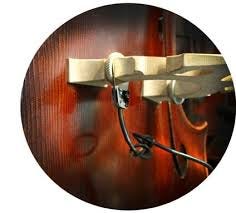
That’s the more recently developed one.
It’s the one that goes under the bridge. Above the bridge, actually.
To get more of the upright sound on the bass guitar – with your amplifier, is there a setting that you like?
I would say watch the treble knob and make sure it’s not boosted too much and watch the high-mid frequencies. High-mid frequencies is where the nasal stuff —midrange is a very dangerous frequency. You need some of it to speak but a lot of people get in trouble with the knob on their bass guitar, the midrange knob, because they don’t know how to use it. It took me forever to figure out what it was doing, and how. Not every midrange knob — the cue or the setting of the midrange frequency, where it’s focused or where it’s accented, is different with different makers. They don’t all put it in the same place in the preamps.
Certain basses, because the wood they have, have a natural sound for all the frequencies. Not just the mids — the lows and the mids and the highs. Those old instruments that we all love, old electric basses that have a certain kind of natural midrange that speaks and the high end is very smooth.
And in the old times, like the first electric bass, which is the P (Precision) bass, Fender made that with the acoustic bass in mind. He was trying to get something close to that. So that’s one sound. A lot of the Yamahas I have – we’ve tried to be able to get that warmth and roundness of the thing that people love about the old Fenders but also have some other things available, not just one sound.
With the Yamaha, the semi-acoustic — is there a kind of wood that you sought for those reasons?
Usually there’s some sort of maple on the top even if it’s just a laminate over something to open up the high end. But also the old woods for resonance like alder, ash. And with the big one (semi-hollow bass guitar) that I have there’s a big slab of mahogany in the middle, almost like a bass bar on an acoustic bass. That mahogany is incredible for resonance. The bottom is so huge. I think it’s a maple top.
Same with the fingerboard?
I think it’s an ebony fingerboard. Then there’s maple on the back. But there’s also a strip of mahogany there, too. It’s really beautiful, what he did.
What kind of got me on to this was, some years ago on the back of Bass Player magazine they kept on advertising D’Angelico would make these semi-hollow beautiful basses. They were so glorious looking. I said “Well, that’s cool but I need a six string.” I’ve been with Yamaha forever. We have a great relationship. So I said “You know, would you guys make me …?” And they said they were up for the challenge. This is not an easy instrument to make. Pat is so gifted. That one – the first one out of the gate was perfect. That’s the bass I have. He only had to make one of those. When we started to try to make the small version, that took a couple of tries. Making it small and still trying to get as much resonance as possible.
That big one – I swear, if you play a note, the bottom is tremendous. If somebody wasn’t looking at it they wouldn’t think it was a six string. Some people have eye bias. They think it’s going to not have that old bass fundamental. It’s not true though. And in that one if you close your eyes, it’s the biggest fattest thing you’ve ever heard. You wouldn’t even know what it is.
I don’t like a lot of six-strings and five-strings because the B is so floppy.
That one is the best one I’ve ever had. The B on the big one is like (makes sound). And the high notes ring. They really sing.
And the scale is 35 inch?
It might be a 34.
When you think of what’s right in a straight-ahead swinging context does upright still seem like the one that ought to be there, or do you feel like –
It depends on the music. Certain music that I do, I think of the acoustic because there’s other possibilities – I also play with the bow. It’s not just the fact that it was made for walking. There’s certain kind of tunes that I just want to have that.
And then sometimes it just sounds good when you’re walking (on electric). Hopefully when people hear “Brooklyn” there’s a case for that. You hear it walking and it doesn’t sound like it shouldn’t be there, to me. And I hope other people agree. But there’s certain kinds of bands that I would only bring the acoustic, just like there’s certain kinds of music I would only bring the electric. But there’s been a lot more grey area over the 15/20 years in that. People use them both in different mixtures.
Christian McBride is one of those guys who has done so many recordings as an upright player. Everybody knew him primarily on upright but then he started doing a couple of the fusion –
Yeah, because he loves James Brown. He played in Chick’s Five Peace Band and was playing a lot of electric as well. Because It has to do with a certain age group. My age, I’m 58. Christian is at least 10 years younger than I am, maybe more. So that generation grew up listening to so much electric music. So did mine really. But the generation above (before) me, you get guys like Eddie and Dave and obviously Ron — those guys didn’t grow up hearing electric music.
They were there right as the bass guitar was coming out.
The electric (bass) wasn’t even invented until ’51, I think.
Yeah.
So with each progressive generation, the electric (took greater hold) – even though some guys didn’t play it much. There are young guys that don’t play the electric much. But they heard the sound and they heard a lot of that music. I’ve played with some guitar players who really want to play kind of rocked out sound, but they like the sound of the acoustic (bass). Which sometimes is hard for me because I can’t hear – I can’t get the sound that I want (in that context). I can’t get an acoustic sound anymore because I have to use the pickup.
Like with a rockabilly band they always want a big fat upright but they’ve got the electric guitar blazing.
Yeah, I don’t know how that works. They usually use a pickup.
What’s your primary upright that you’re playing these days?
I have the old faithful with me out here. I had (David) Gage do a neck-off surgery to it, it’s a Pollmann bass that I’ve used forever.
Then there was that period, I don’t know if you ever heard the record “Line by Line.” I had a Vuillaume, an old French bass, kind of a cousin to Charlie Haden’s bass, the one that he played – same maker. He didn’t make that many double basses – Vuillaume. He was famous for violins that rivaled Stradivarius. He used to copy Strads. So people, if they had their eyes closed, they couldn’t tell the difference in the sound. It was a great instrument. But then you know my daughters were coming up towards college age so I cashed out of the big fiddle. Because I had taken a loan out to get it. And then I sold it and took the money and we did some things with it. Then after that I had a five-string bass for a while that I sold.
I have this Gagliano copy. My mentor, Chris Poehler, he was acquiring basses and getting them restored by Lisa Gass, this lady in L.A. who has a double bass shop (Los Angeles Bass Works). He got Art Davis’s two instruments – that were his primary instruments. After he died, the son sold them. One was a Gagliano – a real Gagliano, a Neapolitan maker who made some really nice sounding basses. Not as pretty looking as some of the other Italian basses that are like worth a gazillion bucks. But the sound is huge.
He (Davis) also had a John Lott, an English bass. In the order of preference, any collector or any dealer will tell you it goes Italian, English, French, German and everybody else. So this British bass was also killing, that Art Davis had, who played with Trane and McCoy Tyner.
He (Poehler) took these two basses to Lisa’s shop to restore them. She had the Galiano in pieces. There was a young hotshot luthier (Trevor Davis) who was working in the shop who has won all these awards. She gave him some of the wood that was the same as the old Italian basses. Poplar.
He (Davis) measured every inch of the bass while it was all apart. She had it all apart to restore it. And he made a copy. He made it look old and it sounds old, too. It sounds really good. That’s my main jazz axe. (For) when I’m home. I don’t travel with it. It wasn’t that expensive, but it’s huge.
Do you use that for recording?
Yeah.
But when you travel?
The good old Pollmann, which I’ve made I made most of the records in my career on that bass. A lot of records.
Copyright 2025 by Philip Booth. All rights reserved.